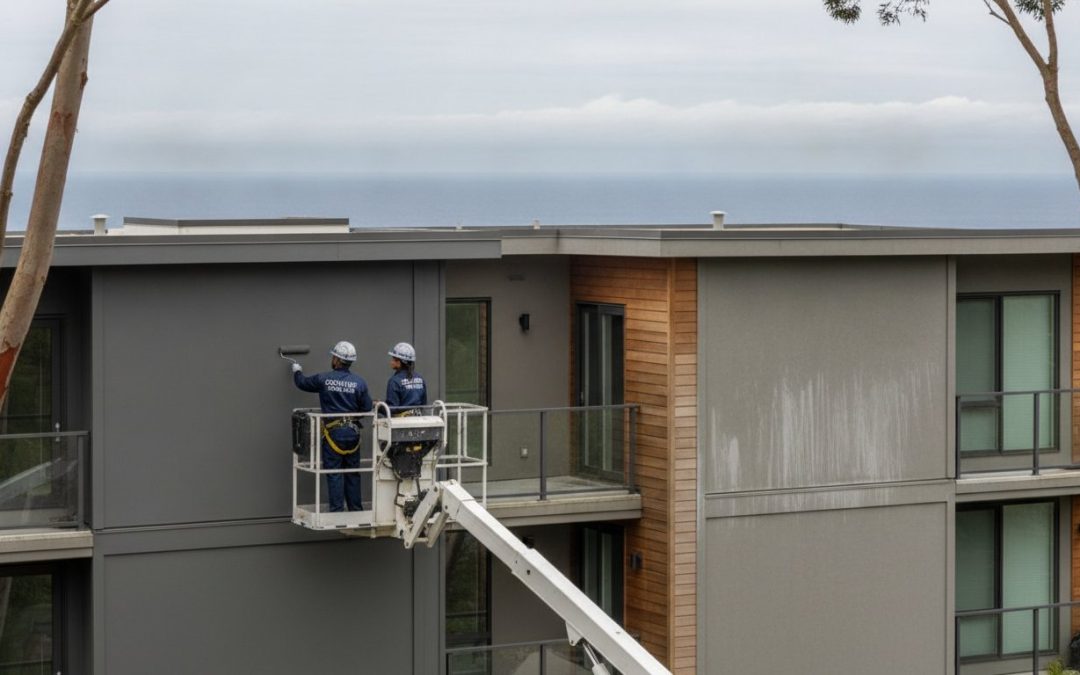
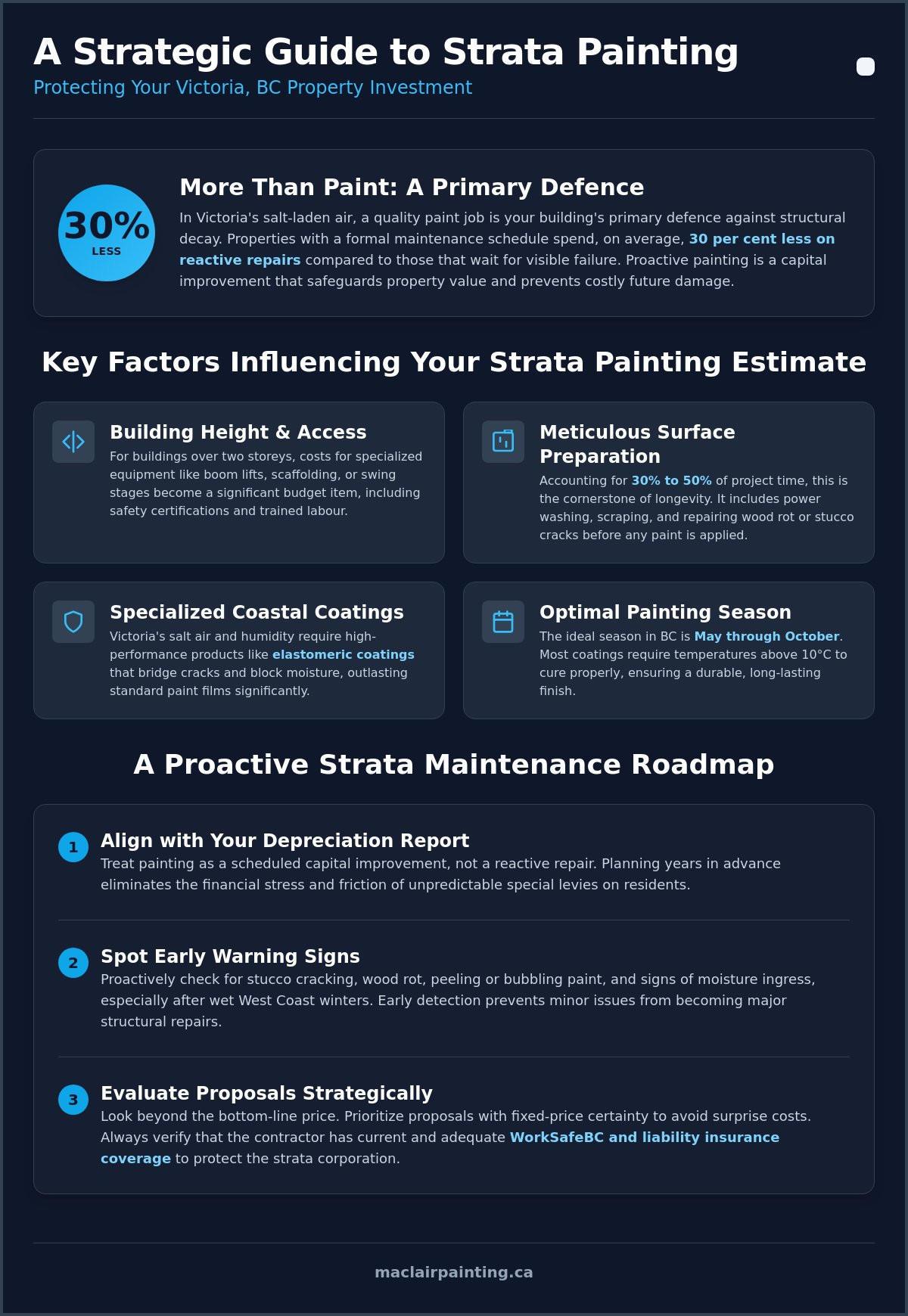
In the salt-laden air of Victoria, a strata’s exterior paint is less of a cosmetic choice and more of a primary defense against structural decay. Many strata councils view these projects as a looming financial burden, fearing the friction of special levies and the logistical headache of managing large-scale work in our unique coastal climate. Understanding the nuances of strata painting cost Victoria BC involves more than just comparing quotes; it requires a strategic look at how quality materials and meticulous timing protect your long-term investment. Properties that follow a formal maintenance schedule often spend 30 per cent less on reactive repairs compared to those that wait for visible failure, according to industry data from local specialists.
We’re here to help you master the complexities of painting budgets and maintenance cycles so you can safeguard your property value with confidence. You deserve a process that prioritizes durability and resident peace of mind over quick, transactional fixes. This guide provides a clear breakdown of the primary cost drivers, a predictable schedule for your depreciation report, and a roadmap for achieving flawless results that enhance your building’s curb appeal for years to come.
Key Takeaways
- Learn how to align your painting cycles with your strata’s Depreciation Report to eliminate the financial stress of unpredictable special levies.
- Identify the primary variables that influence the strata painting cost Victoria BC property owners face, from specialized access equipment to meticulous surface preparation.
- Master a proactive maintenance checklist to spot early warning signs like stucco cracking and moisture ingress before they lead to costly structural repairs.
- Understand how to evaluate commercial proposals by prioritizing fixed-price certainty and verifying essential WorkSafeBC and liability insurance coverage.
- Discover how a strategic, long-term maintenance plan preserves both the aesthetic elegance and the structural integrity of Victoria’s unique coastal architecture.
Understanding Strata Painting Costs in Victoria: An Investment Perspective
Strata painting is far more than a simple aesthetic refresh; it’s a sophisticated technical requirement for any multi-unit residential property. Unlike a single-family home, a strata complex represents a collective asset where maintenance decisions impact dozens of stakeholders simultaneously. Understanding Strata Ownership helps clarify why these projects are managed through a corporate lens, requiring a meticulous approach to budgeting and execution. Central to this process is the Depreciation Report. This document acts as a financial roadmap, ensuring that the strata painting cost Victoria BC councils anticipate is accounted for years in advance. By treating painting as a scheduled capital improvement rather than a reactive repair, councils can avoid the friction of unexpected levies and preserve the building’s structural integrity.
In our coastal environment, specifically within moisture-prone areas like Saanich and Oak Bay, the air is thick with humidity and microscopic salt particles. These elements act as natural abrasives and catalysts for oxidation, breaking down standard paint films significantly faster than they would in the dry interior of British Columbia. Choosing the cheapest quote often results in a “surface-only” application that ignores these environmental stressors. Without premium moisture-management strategies, a low-cost job may fail within three years, ultimately doubling the long-term maintenance burden for the owners. True value lies in selecting a partner who understands that a coating is a protective envelope, not just a colour change.
The Difference Between Residential and Strata Scale
A strata project demands a level of coordination that transcends typical residential work. Instead of a single point of contact, crews must navigate the concerns and access requirements of numerous residents while maintaining a strict timeline. Standardized colour palettes are essential to ensure visual continuity across multiple buildings. This scale requires larger, highly managed teams and significant project management oversight to ensure the work remains on track without disrupting the daily lives of the community. It’s about balancing technical precision with resident diplomacy.
Why Victoria Properties Require Specialized Coatings
The “salt air effect” is a constant threat to Victoria’s building envelopes. To combat this, we prioritize specialized coatings like high-performance elastomeric products for stucco surfaces. These coatings are designed to bridge hairline cracks and move with the building, preventing moisture from seeping into the substrate. Professional surface preparation Victoria teams perform is also more rigorous here; we must account for high ambient humidity to ensure that every layer bonds perfectly, creating a resilient barrier that stands up to our wet West Coast winters.
Critical Factors Influencing Your Strata Painting Estimate
Estimating the strata painting cost Victoria BC councils must budget for requires a shift from simple square footage to technical complexity. While a standard home quote focuses primarily on surface area, a strata estimate is heavily influenced by logistical variables and building height. If your complex exceeds two storeys, the cost of specialized access equipment like booms, scaffolding, or swing stages becomes a significant factor. These are not merely rental fees; they involve safety certifications and specialized labour training to operate at height safely. A master craftsman understands that the method of access is as critical as the application itself.
Preparation is the cornerstone of longevity. In Victoria’s damp climate, addressing wood rot or failing stucco before the first drop of paint is applied is critical. Research indicates that meticulous surface preparation can account for 30 to 50 per cent of a professional painter’s time. Addressing peeling paint and performing thorough power washing are non-negotiable steps. Skipping these requirements to save on the initial quote invariably leads to premature coating failure. Scheduling also plays a role. The optimal painting season in BC runs from May through October, as most exterior coatings shouldn’t be applied below 10°C. Attempting to squeeze a project into the shoulder season might offer lower rates but risks compromising the cure cycle of the paint. If you’re unsure where your building stands, we recommend a thorough walkthrough with a trusted painting consultant to identify potential issues before they escalate.
Evaluating Interior vs. Exterior Strata Costs
Common area hallways require durable paint for high-traffic strata hallways that can withstand constant foot traffic and frequent cleaning, as well as low-VOC finishes. On the exterior, the substrate dictates the technical approach. Cedar siding demands deep-penetrating stains, while Hardie Plank or stucco requires specific elastomeric or acrylic systems. For a deeper look at how these choices impact property value, see our guide on Apartment Building Painting in Victoria.
The Hidden Costs of Specialized Surfaces
Comprehensive strata maintenance often extends beyond the building envelope. Protecting parkade floors with a high-performance epoxy floor coating Victoria BC residents appreciate for its cleanliness and durability is a wise long-term investment. Additionally, refinishing shared decks or addressing metal railings to prevent rust in our salt-heavy air requires specialized knowledge of metal-clad primers and industrial-grade coatings to ensure a lasting bond.
The Strata Building Maintenance Painting Checklist
Adopt a proactive stance toward property care. Establishing a rigorous annual inspection routine is the most effective way to manage the long-term strata painting cost Victoria BC councils must oversee. During these walkthroughs, look for “alligatoring,” a pattern of cracking that resembles reptile scales, which indicates the paint film has lost its elasticity. You should also check for chalking, where a powdery residue appears on the surface as the binder breaks down under UV exposure. Identifying hairline cracks in stucco early is equally vital; these tiny fissures are often the first entry points for moisture, which can lead to significant substrate damage if left unaddressed. By catching these indicators early, you can resolve minor issues before they necessitate a complete and costly substrate restoration.
Moisture is the silent enemy of coastal structures. Effective maintenance requires a holistic view that includes clearing gutters and ensuring water does not pool against the building’s foundation; specialized exterior maintenance experts like Snugs Services highlight that routine cleaning is a fundamental step in preserving the building envelope. When moisture is trapped against a painted surface, it forces the coating to delaminate, leading to premature peeling. We also advocate for the “7-10 Year Rule.” While it’s tempting to defer a major project to save funds, waiting longer than a decade for a full exterior repaint often increases your expenses exponentially. Beyond the ten-year mark, the level of scraping, sanding, and priming required typically doubles, as the previous coating has likely failed beyond the point of simple top-coating. Routine touch-ups in high-traffic interior areas every two to three years can also prevent the need for a full, disruptive repaint of your common areas.
Exterior Preservation Priorities
Focus your attention on south-facing walls, as these surfaces endure the most intense UV radiation and show signs of colour fading first. It’s also essential to verify that wood staining services Victoria properties require for cedar features are performed every three to five years. This frequency preserves the natural oils in the wood and prevents silvering or rot. Finally, inspect the caulking around windows and doors; maintaining these seals is your primary line of defense against water ingress during our wet winters.
Interior Common Area Standards
Lobbies and elevator banks demand scuff-resistant, high-performance paints that can withstand the rigours of daily resident traffic. We suggest standardizing your finish choices to ensure consistency across the complex, which simplifies future touch-ups and maintains a cohesive aesthetic. Scheduling these “refresh” projects during low-occupancy periods or quieter seasons minimizes disruption to residents while ensuring the environment remains polished, reinforcing a sense of pride and value within the community.
How to Evaluate and Compare Strata Painting Proposals
Selecting the right partner for your project requires a discerning eye for detail that goes beyond the final number. To accurately gauge the strata painting cost Victoria BC property managers should expect, you must weigh the certainty of a fixed-price contract against the inherent risks of hourly billing. A fixed-price proposal provides the strata council with financial stability, ensuring that the project remains within the allocated contingency reserve without the threat of unexpected labour overages. This transparency is vital for maintaining trust between the council and the ownership group. When you review a proposal, look for a comprehensive scope of work that specifically lists power washing, meticulous priming, and a two-coat finish as standard inclusions.
Safety and liability are paramount on multi-unit sites. Every reputable contractor working on strata common property in BC must provide proof of active WorkSafeBC coverage and a minimum of $5 million in commercial general liability insurance. These aren’t just administrative hurdles; they’re essential protections that shield the strata corporation from the financial fallout of on-site accidents or property damage. Additionally, ask for a clear communication protocol. A professional team will have a structured plan to notify residents of upcoming work, balcony access requirements, and door-painting schedules, minimizing disruption and resident complaints. If you’re ready to see how a structured, transparent proposal looks for your property, we invite you to request a professional strata consultation with our team.
Technical Red Flags in Low Estimates
A significantly lower quote often signals that a contractor is cutting corners in areas that directly impact longevity. The most common omission is detailed surface preparation, which is the most labour-intensive and critical part of the job. You might also find “contractor grade” paints substituted for premium, moisture-resistant alternatives that are better suited for our coastal climate. Finally, be wary of vague timelines. A project that lacks a clear start and end date can result in scaffolding remaining on your site for months, causing unnecessary frustration for your residents.
Questions Every Strata Council Should Ask
Before signing any contract, clarify how the team plans to protect shared landscaping and resident property, such as vehicles and patio furniture. Inquire about their specific process for handling unforeseen wood rot; a professional should have a protocol for pausing work, documenting the damage, and providing a change order before proceeding. For a deeper dive into the vetting process, refer to our guide on The Ultimate Checklist for Hiring Professional Painters in Victoria to ensure no detail is overlooked during your selection process.
Long-Term Asset Preservation with MACLAIR Painting
At MACLAIR Painting, we view every strata project as a stewardship of Victoria’s architectural legacy. Our “Master Class” approach ensures that your property receives more than just a fresh coat of paint; it benefits from a technical strategy designed for longevity and aesthetic distinction. By developing a customized commercial painting maintenance plan Victoria BC strata councils can rely on, we help you transition from reactive spending to a model of predictable asset preservation. This strategic foresight is particularly valuable when managing the strata painting cost Victoria BC owners must balance against other essential capital repairs. We bring the same rigorous cleanliness and low-VOC standards used in our medical facility and retirement community projects to your residential environment, ensuring a sophisticated finish that respects the health and comfort of every resident. Our coatings are selected specifically for their ability to withstand the relentless salt air and driving rain of the BC coast, providing a durable barrier that maintains its brilliance year after year.
Strategic Planning for Strata Councils
We collaborate closely with property managers to ensure our work aligns perfectly with your most recent reserve fund study. For large townhouse complexes where a single project might strain the contingency fund, we offer phased painting options. This allows you to address the most vulnerable elevations first, such as south-facing walls prone to UV damage, while spreading the financial commitment over several budget cycles. Councils managing townhouse communities across Greater Victoria may also benefit from reviewing the latest strata painting Langford trends for 2026, which highlight emerging moisture-resistant coating technologies and colour strategies that are equally applicable to Victoria properties. This approach maintains a consistent standard of protection without the need for aggressive special levies. Every project we complete is backed by detailed documentation, providing a clear record for your strata’s future maintenance history and ensuring that subsequent councils have the data they need to make informed decisions.
Experience the MACLAIR Difference
Our team operates with a quiet confidence born from decades of experience in Victoria’s unique coastal environment. Whether we are meticulously restoring a heritage facade or applying advanced epoxy solutions to high-traffic common areas, we prioritize craftsmanship over speed. We don’t just perform a task; we provide a transformative experience that elevates the entire property environment. We invite you to contact Micheal and the team today for a professional strata consultation to discuss how we can enhance and protect your property investment for the years ahead. We believe in the preservation of value through meticulous care, ensuring your building remains a source of pride for every owner who calls it home.
Secure the Future of Your Victoria Strata Property
Navigating the technical and financial demands of multi-unit maintenance requires a sophisticated balance of foresight and expertise. By aligning your painting cycles with long-term depreciation reports and prioritizing high-durability coastal coatings, you transform a necessary expense into a strategic investment in asset preservation. Preparation is everything. Managing the strata painting cost Victoria BC residents expect involves more than just selecting a shade; it’s about choosing a partner who understands the unique environmental stressors of the West Coast building envelope.
As specialized experts in Victoria strata complexes, our team provides the quiet confidence and technical mastery your project deserves. We are WorkSafeBC registered and fully insured professionals committed to delivering sophisticated finishes that endure our coastal climate. Request a Professional Strata Painting Consultation to begin your journey toward a more resilient and beautiful property. Let’s work together to enhance your building’s curb appeal and structural integrity for years to come.
Frequently Asked Questions
How much does strata painting cost per unit in Victoria?
Strata painting costs per unit are determined by the total project scope rather than a flat per-door fee. Factors like building height, the number of buildings in a complex, and the specific substrate condition all play a role. It’s best to review the total strata painting cost Victoria BC councils have budgeted against their unit count to understand the individual impact of the investment on each owner.
How often should a strata building in BC be repainted?
Most strata buildings in British Columbia require a full exterior repaint every 7 to 10 years. In Victoria’s salt-heavy environment, south-facing walls or exposed cedar features might need attention sooner to prevent structural decay. Delaying this cycle beyond a decade often leads to significantly higher preparation costs because the previous coating has likely failed beyond the point of simple top-coating.
Does the strata council or the individual owner pay for balcony painting?
Financial responsibility for balcony painting is typically dictated by your strata’s specific bylaws and the definition of common property. Most balconies are classified as limited common property, meaning the strata corporation handles the structural maintenance and painting to ensure aesthetic consistency and moisture protection. Owners should consult their specific strata plan and bylaws to confirm who is responsible for the costs.
Can strata painting be done in the winter in Victoria?
Exterior strata painting is generally not performed during a Victoria winter because most professional-grade coatings require temperatures above 10°C to cure properly. While interior common areas can be painted year-round, exterior projects are best scheduled between May and October. This ensures the coating bonds correctly in our high-humidity climate and doesn’t face wash-offs from unpredictable rainfall.
What is the best type of paint for Victoria’s coastal humidity?
High-performance elastomeric coatings and premium 100 per cent acrylic paints are the most effective choices for our local humidity. These products are engineered to be breathable, allowing moisture to escape the building envelope while preventing rain from entering. They offer the elasticity needed to bridge hairline cracks in stucco, which is essential for providing a durable barrier against coastal air.
How do we minimize resident disruption during a large strata painting project?
Minimizing disruption requires a structured communication protocol that keeps residents informed well in advance of any site activity. Providing a clear schedule for balcony access and door painting allows owners to prepare their personal spaces. Using a phased approach also ensures that only specific sections of a complex are active at any given time, preserving peace and privacy for the majority of the community.
Is a special levy always required for strata painting?
A special levy isn’t always necessary if the strata corporation has consistently contributed to its Contingency Reserve Fund. By following the recommendations in a professional Depreciation Report, councils can save incrementally over several years. This proactive financial planning ensures funds are available when the maintenance cycle requires action, avoiding the sudden financial pressure of a large levy on individual owners.
How do we know if our building needs a full repaint or just a touch-up?
You can determine the need for a full repaint by inspecting for signs of widespread coating failure like chalking or deep cracking. If the issues are isolated to high-traffic areas or specific trim pieces, a targeted touch-up program may suffice to maintain the aesthetic. However, if the binder in the paint has degraded across the entire facade, a full repaint is required to maintain the building’s protective seal.