In Victoria’s temperamental coastal climate, a single afternoon of unexpected mist can transform a premium paint application into a costly restoration project. You likely realize that timing is everything when it comes to preserving your property’s character, yet the “perfect day” often feels like a moving target amidst unpredictable Island rain and rising humidity. Identifying the best time of year for exterior painting Victoria BC is a science of moisture management rather than a simple search for sunny skies.
This 2026 guide reveals the precise seasonal windows and technical conditions required to achieve a flawless, high-quality finish that remains resilient against the salt air. We will examine the critical temperature thresholds and humidity levels that professional craftsmen monitor to ensure your home receives the protection it deserves. By understanding these environmental benchmarks, you can schedule your project with absolute confidence, ensuring the weather never compromises the longevity of your investment. We will also explore how to navigate the busy local market to secure your place during the ideal summer window.
Key Takeaways
- Learn how Victoria’s unique coastal microclimates and proximity to the Salish Sea influence the meticulous preparation required for a durable finish.
- Identify the best time of year for exterior painting Victoria BC by balancing the peak summer window against the specific technical requirements of our maritime environment.
- Discover the critical “Dew Point” rule and why maintaining specific surface temperatures is essential for preventing bubbling and premature coating failures.
- Realize why early strategic planning is vital, as the most sought-after professionals often organize their schedules four to six months before the dry season begins.
- Understand how specialized moisture meters and premium coastal-grade coatings act as an essential investment in your property’s long-term preservation and aesthetic value.
Why Victoria’s Coastal Microclimates Dictate Your Painting Schedule
Victoria’s geography is a masterpiece of coastal beauty, but it presents a sophisticated set of challenges for property maintenance. The proximity to the Salish Sea creates localized humidity pockets that can compromise even the most expensive coatings if the timing isn’t perfect. Identifying the best time of year for exterior painting Victoria BC requires more than just glancing at a five-day forecast; it demands an understanding of how our maritime environment interacts with surface chemistry. A master craftsman recognizes that a “dry day” in Saanich might offer ideal conditions, while a home in James Bay remains shrouded in a lingering sea mist that makes painting impossible.
Living near the waterfront means salt-laden air is a constant companion. Before the first brushstroke, we must address the microscopic salt crystals that settle on your siding. If these aren’t meticulously removed, they prevent proper adhesion and lead to premature peeling. Understanding the basics of paint and how its resins bond to a substrate is crucial when dealing with these coastal variables. Wind also plays a pivotal role in our region. A stiff breeze off the Juan de Fuca Strait can accelerate drying times too quickly, causing unsightly brush marks, or carry garden debris and sea salt directly into your fresh, wet finish.
The Challenge of Coastal Humidity
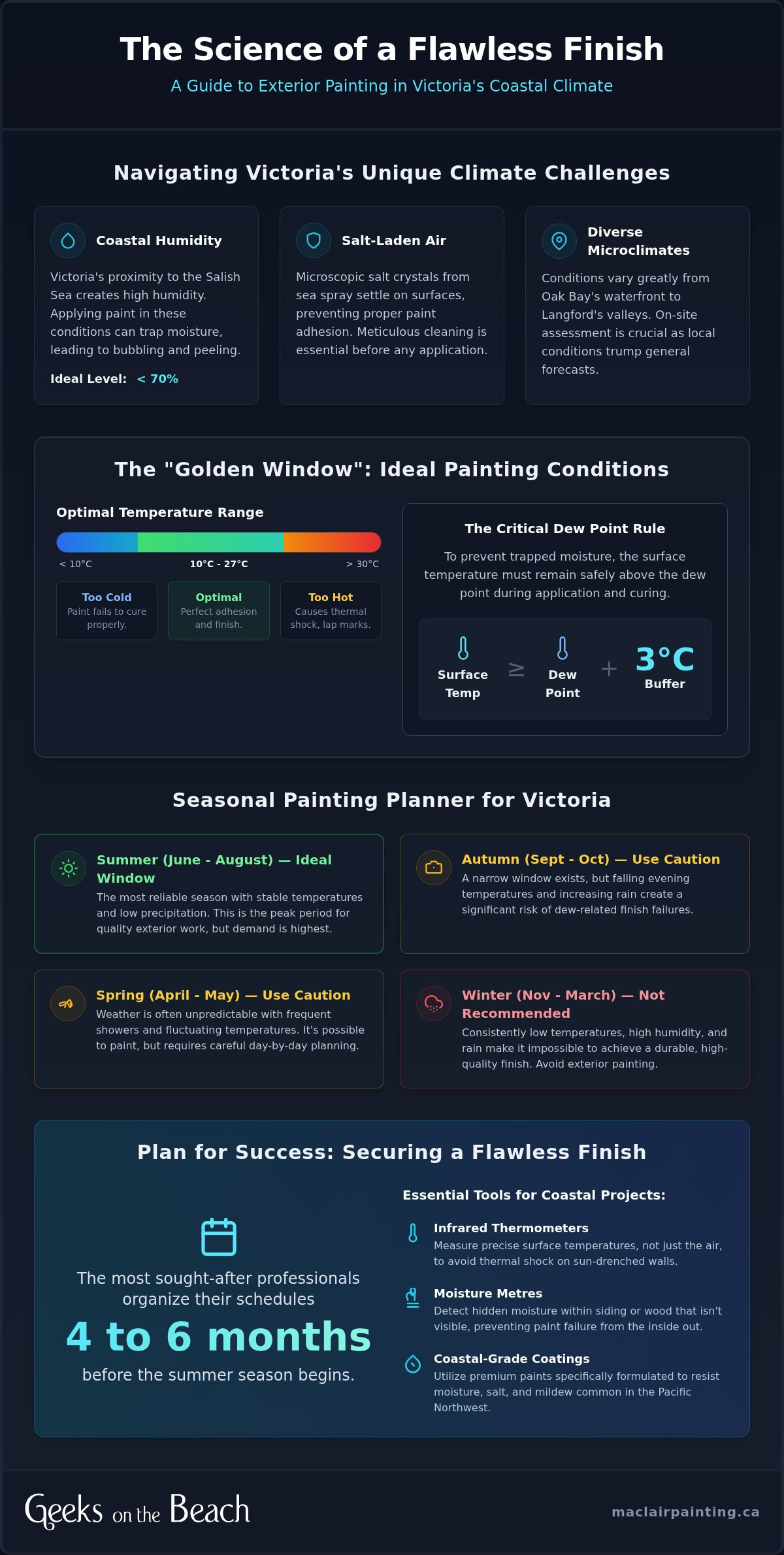
Relative humidity is the silent regulator of project quality. For optimal paint adhesion and a durable cure, humidity levels should ideally remain below 70%. In our coastal neighbourhoods, morning mist often settles on surfaces, creating an invisible moisture barrier that is difficult to detect without specialized tools. Applying paint over this microscopic layer traps moisture, which eventually causes bubbling and failure. We prioritize the use of moisture-resistant paints specifically engineered for the Pacific Northwest to ensure your home remains protected against our damp winters.
Microclimates: From Oak Bay to Langford
Victoria is a patchwork of distinct microclimates. A waterfront estate in Oak Bay experiences significantly more temperature fluctuation and salt exposure than a sheltered property in the Langford valleys. Even on a single lot, the deep shade from Garry Oaks can extend drying times on north-facing walls by several hours compared to sun-drenched elevations. This is why local expertise remains essential to judge the “real” weather on-site. A professional assessment of moisture levels ensures the wood or masonry is truly ready, preserving the long-term value and aesthetic excellence of your property.
The Science of a Flawless Finish: Temperature and Dew Point
The chemistry of a high-end exterior finish depends on a delicate balance of thermal conditions. While many homeowners focus solely on avoiding rain, the actual best time of year for exterior painting Victoria BC is defined by the relationship between temperature and moisture. Modern acrylic latex and alkyd paints are engineered to perform within a specific window, typically between 10°C and 27°C. If the ambient temperature climbs above 30°C, the solvent evaporates too rapidly. This prevents the coating from levelling properly, resulting in unsightly lap marks and a compromised protective barrier that will fail prematurely under the coastal sun.
Surface vs. Air Temperature
Monitoring the surface itself is just as vital as checking the air. Professional craftsmen recognize that a wall in direct July sunlight can easily reach temperatures 20 degrees higher than the surrounding atmosphere. Applying paint to a scorching surface causes thermal shock, where the coating dries instantly on contact rather than bonding deeply with the substrate. We often rotate our work around a building to stay in the shade, using infrared thermometers to ensure every elevation is within the safe zone before a single drop is applied.
Understanding the Dew Point
In Victoria’s maritime climate, the dew point is perhaps the most critical technical factor. The dew point is the temperature where air can no longer hold its water vapour. To prevent moisture from being trapped beneath the paint film, the surface temperature must remain at least 3°C above the dew point throughout the application and initial drying phase. If the temperature drops too quickly in the evening, you risk blushing or surfactant leaching, which leaves permanent oily streaks on the finish. This is why we often delay early morning starts until the sun has sufficiently warmed the building and cleared the overnight dampness.
The first 24 hours after application are vital for a successful cure. During this window, the paint undergoes a complex chemical transformation to reach its full hardness and protective capacity. Even if the surface feels dry to the touch within an hour, it remains vulnerable to high humidity or sudden temperature shifts that can ruin the sheen. By respecting these scientific boundaries, we provide a transformative experience that protects your property for years to come. For those seeking a meticulous approach to their next project, consulting with a technical expert is the first step toward a lasting finish.
Evaluating the Seasons: When to Book Your Victoria Exterior Project
Selecting the right month for your project is a strategic decision that impacts both the beauty and the lifespan of your property’s finish. While the calendar offers several possibilities, determining the best time of year for exterior painting Victoria BC involves balancing the desire for sunshine with the technical realities of our coastal seasons. Each period presents a unique set of variables that a master craftsman must navigate to ensure a transformative result.
Spring, spanning April and May, often tempts homeowners with the first signs of warmth. However, this period carries significant risks. Lingering Pacific storms can appear with little warning, and high pollen counts pose a silent threat to wet coatings. Fine yellow dust can become permanently embedded in a fresh finish, compromising the sheen and texture. Conversely, the winter months from November to March are reserved for interior transformations and meticulous project planning. This is the time to organize your vision, as the outdoor environment is too volatile for high-end exterior work.
The June Gloom Factor
Early summer in Victoria is often defined by “June Gloom,” a persistent marine layer that keeps temperatures cool and humidity levels high. While the air may feel dry, these coastal clouds can linger well into the afternoon, shortening the daily window for effective painting. We often realize that July and August are more suitable for large-scale strata building and complex painting, where consistent conditions are required over several weeks. For heritage home restoration, navigating the May-June transition requires a patient approach to ensure delicate wood surfaces are truly ready for primer.
The September Golden Window
Many residents overlook September, yet it often stands as the most predictable month for exterior work. Stable high-pressure systems frequently settle over the Island, providing clear skies and lower humidity levels than the rainy spring months. This “Golden Window” offers cooler, consistent temperatures that are ideal for the even curing of wood staining services. Without the intense, blistering heat of mid-July, the paint has ample time to level and bond, creating a resilient barrier against the coming winter rains. September provides the quiet confidence that the weather will remain stable enough to complete complex, multi-day projects without interruption.
Planning your project around these seasonal nuances ensures your home receives a finish that is both functional and artistic. By respecting the natural rhythms of the Island, you protect your investment and ensure your property remains a local landmark of excellence.
Strategic Planning: How to Secure the Ideal Painting Window
Securing a premium finish requires more than just checking the weather; it demands foresight and logistical precision. You should realize that the most reputable master craftsmen in the region typically book their schedules 4 to 6 months in advance. While identifying the best time of year for exterior painting Victoria BC is a vital first step, without an early reservation, your project may be deferred to a less ideal season. This delay can lead to compromised results or higher costs due to emergency repairs that could have been avoided with proactive scheduling.
The Booking Timeline
Winter serves as the essential season for meticulous research and colour selection. During these months, we act as trusted consultants to help you organize your vision and secure your place on the summer schedule. As early spring arrives, focus shifts to finalizing contracts and addressing structural concerns, such as wood rot treatment or minor repairs. Late spring provides the first consistent window for professional surface preparation. We utilize this time for deep pressure washing to strip away winter grime and salt deposits, ensuring the substrate is pristine before the primary coating application begins.
Strata and Commercial Considerations
For strata complexes and specialized environments like medical facilities, coordination is paramount. We manage the delicate balance between resident communication and weather-dependent technical requirements. Implementing a commercial painting maintenance plan Victoria BC allows property managers to transition from reactive fixes to a strategic model of asset preservation. This is especially critical for downtown properties where managing equipment like lifts and scaffolding must be synchronized with the peak 2026 tourist season to minimize disruption to local commerce and pedestrian traffic.
Integrating wood staining services Victoria into a broader exterior refresh allows for a cohesive aesthetic that celebrates natural textures while providing essential coastal protection. Before any stain or paint is applied, our team performs a professional assessment of moisture levels to ensure the material is ready to receive the coating. This methodical approach guarantees that every brushstroke contributes to a durable, high-quality finish. To ensure your property is prioritized for the upcoming season, contact our consulting team to begin the planning process today.
Beyond the Calendar: Why Professional Craftsmanship Trumps the Forecast
While the calendar provides a vital framework for your project, the ultimate success of a high-end finish depends on technical precision that transcends a simple weather report. Even during the best time of year for exterior painting Victoria BC, environmental variables can shift within minutes. A master craftsman does not merely watch the sky; they utilize diagnostic tools to verify that your home’s substrate is chemically and physically prepared to receive a premium coating. This methodical approach ensures that your investment is protected by more than just luck, providing a resilient barrier that withstands the rigours of our coastal environment.
Technical Tools of the Trade
We rely on sophisticated instrumentation to remove the guesswork from every application. Moisture meters are an essential part of our process, allowing us to confirm that wood siding or trim has reached the specific internal dryness required for paint or stain to bond permanently. We also employ infrared thermometers to monitor surface temperatures in real-time. This prevents the application of coatings to surfaces that are too hot or too cold, regardless of what the ambient air temperature might suggest.
The selection of materials is equally critical. We prioritize high-solids paints and coastal-grade coatings that provide a thicker, more durable protective barrier against intense UV exposure and salt-laden air. Our residential painters Victoria BC prioritize longevity over speed, taking the necessary time to ensure each layer cures perfectly before the next is applied. This commitment to craftsmanship ensures that the aesthetic excellence of your property remains uncompromised for years to come.
The Value of a Trusted Consultant
Professional oversight is the only definitive way to prevent the bubbling, peeling, and premature failure common in DIY coastal projects. We act as your trusted consultants, guiding you through a sophisticated process that balances technical requirements with your personal aesthetic goals. This methodical journey provides peace of mind, knowing that every detail, from salt removal to final sheen, is handled with quiet confidence and pride in craftsmanship.
Meticulous surface preparation remains the only path to a truly long-lasting finish. By combining our deep understanding of Victoria’s microclimates with professional-grade diagnostics, we transform your property’s exterior into a durable masterpiece. The MACLAIR approach is centered on a customer-centric experience that values quality above all else. To ensure your home receives this level of dedicated care, we invite you to secure your 2026 exterior painting window with MACLAIR Painting today.
Secure Your Property’s Future with Strategic Seasonal Planning
Achieving a flawless finish in Victoria requires a deep respect for our maritime microclimates and the technical science of dew points. You’ve discovered that identifying the best time of year for exterior painting Victoria BC is a science of moisture management rather than a simple search for sunny days. While the summer months offer peak warmth, the stable conditions of the September golden window provide a unique opportunity for precision curing and long-term protection.
At MACLAIR Painting, we bring a master craftsman approach to durable surface solutions, ensuring every project withstands the coastal elements. Trusted by strata complexes and medical facilities across the CRD, our team combines specialized expertise in Victoria’s coastal microclimates with a refined, customer-centric experience. We don’t just apply paint; we provide a transformative investment in your property’s value and aesthetic excellence. Request Your Professional Exterior Painting Consultation with MACLAIR Painting and ensure your home is prioritized for the 2026 season. We look forward to preserving the character and integrity of your environment.
Frequently Asked Questions
What is the absolute best month for exterior painting in Victoria, BC?
July and August offer the most consistent dry weather, but September is often the best time of year for exterior painting Victoria BC due to lower humidity and stable high-pressure systems. These conditions allow the coating to cure slowly and evenly without the risk of thermal shock from extreme mid-summer heat. We prioritize this window for complex residential and strata projects to ensure a durable, sophisticated finish that remains resilient against the elements.
Can you paint a house in Victoria during the winter months?
Exterior painting during a Victoria winter is generally not recommended because humidity levels are too high and temperatures frequently drop below the 10°C threshold required for modern acrylics. Moisture trapped in the substrate during these damp months will inevitably lead to bubbling and peeling. Instead, we utilize the winter season for residential interior painting and strategic project planning to ensure your property is first on the schedule when the dry weather returns.
How long does a professional exterior paint job last in a coastal climate?
A professional application using premium, coastal-grade coatings typically protects your property for seven to ten years. Longevity in our maritime environment depends heavily on the master craftsman approach to surface preparation and the meticulous removal of microscopic salt deposits. Properties directly on the waterfront may require more frequent maintenance assessments compared to sheltered inland homes to preserve their aesthetic excellence and structural integrity over the long term.
What happens if it rains unexpectedly shortly after my house is painted?
Unexpected rain shortly after application can cause surfactant leaching, resulting in oily streaks or a patchy sheen on the finish. If the paint hasn’t reached its initial “dry to touch” phase, the water can wash the binder away and compromise the protective film. We mitigate this risk by monitoring localized microclimate forecasts and ensuring the surface temperature remains safely above the dew point before any work begins on your property.
Is it better to paint in the morning or the afternoon in Victoria?
Late morning is the ideal starting time for most Victoria projects. This delay allows the sun to burn off overnight coastal mist and ensures the surface temperature has risen at least 3°C above the dew point. We often conclude painting by mid-afternoon to allow the coating several hours of stable warmth to begin its curing process before the evening humidity rises and temperatures drop, which prevents moisture from being trapped in the film.
How do I know if my wood siding is too damp to be stained or painted?
You cannot accurately judge moisture levels by sight or touch; professional diagnostic tools are required for a definitive assessment. We use specialized moisture meters to confirm that wood siding has a moisture content below 15% before applying any stains or paints. This technical precision is vital for our wood staining services, as even a small amount of trapped dampness can prevent the oils or resins from penetrating the grain effectively.
Does the type of paint matter more than the time of year in Victoria?
The two factors are inextricably linked. Even the most advanced, high-solids coastal coating will fail if applied during a period of high humidity or on a damp substrate. Conversely, using a budget paint during the ideal summer window won’t provide the UV protection or salt resistance your property requires. We balance these elements by selecting premium materials and scheduling their application during the precise technical windows that our coastal climate demands.