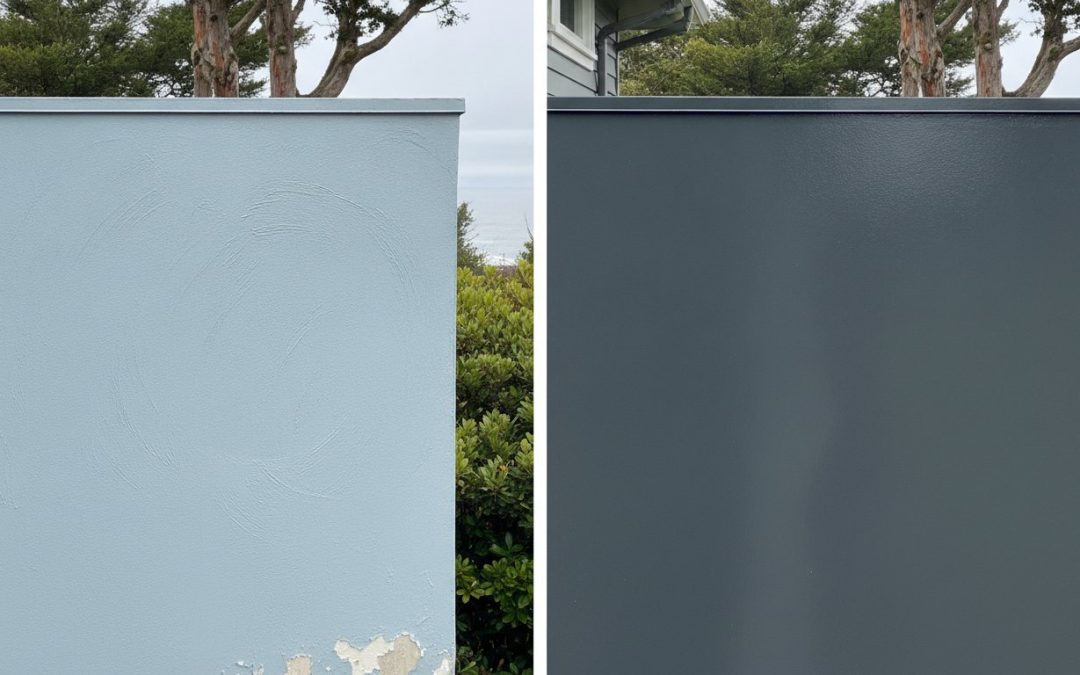
In Victoria’s unforgiving coastal climate, a coat of paint is either a sophisticated shield or a countdown to failure. You likely recognize the appeal of a weekend project, envisioning a fresh aesthetic achieved through personal labour and a few trips to the hardware store. However, the reality of DIY vs professional painting Victoria often reveals itself in the subtle textures left behind. Those visible brush marks and roller stipples might seem minor at first, but they are the tell-tale signs of a project that lacks the technical precision required for a truly high-end finish.
We understand that your home is your most significant asset, and it deserves more than a homemade appearance. This masterclass will guide you through the technical distinctions between a standard home project and a factory-smooth professional application designed to withstand our unique moisture and salt air. You’ll learn how meticulous preparation and specialized coatings transform a simple colour change into a durable investment. We’ll explore the science of adhesion, the impact of local humidity on curing, and how the right choice today ensures your property’s value remains protected for years to come.
Key Takeaways
- Understand why 80% of professional labour occurs before a tin of paint is opened, ensuring a chemically bonded surface that outlasts any standard weekend project.
- Discover the material science behind professional coatings and how higher volume solids provide the necessary protection against Vancouver Island’s salt air.
- Identify the technical distinctions in DIY vs professional painting Victoria by exploring the “Wet Edge” rule and why expert cutting-in provides a superior finish to painter’s tape.
- Master the environmental variables of our coastal climate, specifically how the “Dew Point” rule and local humidity levels dictate the longevity of your exterior surfaces.
- Learn to view a high-end finish as a strategic investment in asset preservation that offers significant long-term savings over a typical three-year DIY cycle.
The Anatomy of a Professional Finish: Why Preparation Defines Longevity
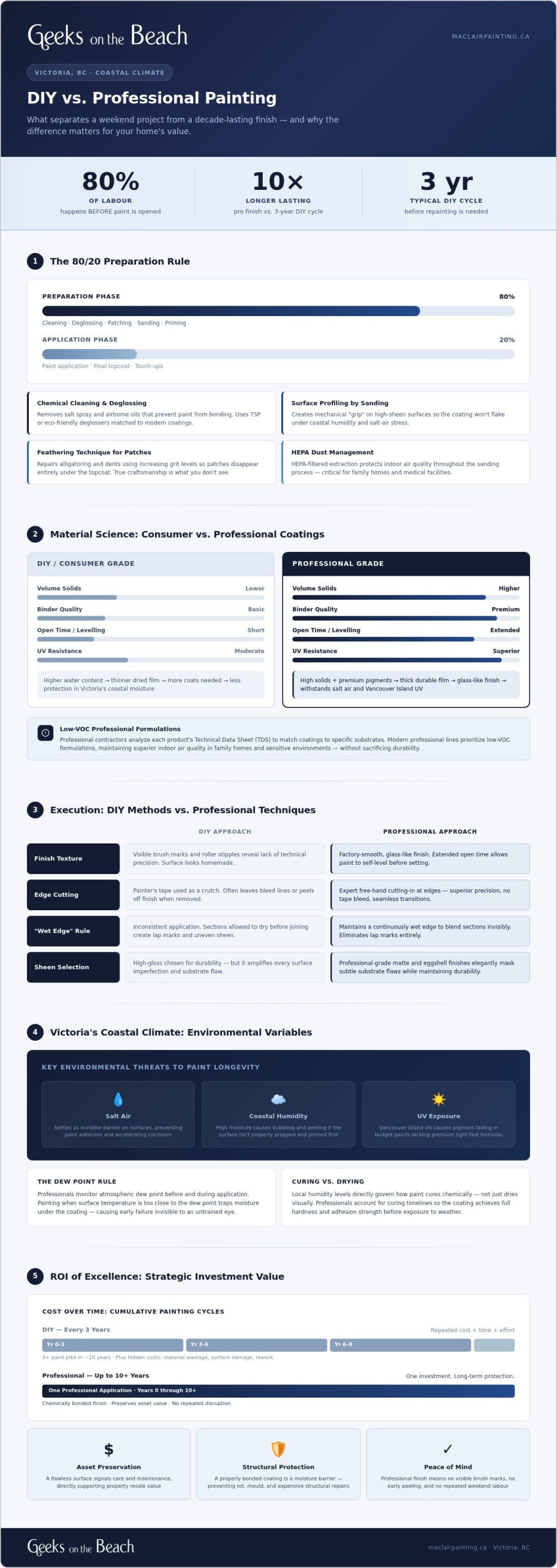
A professional finish is a meticulously engineered surface, not just a layer of colour. When evaluating DIY vs professional painting Victoria, the most significant difference is the chemical bond achieved through rigorous preparation. Professionals follow the 80/20 rule, where 80% of the labour is invested before the first brushstroke. This ensures the coating withstands Victoria’s humidity, preventing the bubbling and peeling common in coastal environments. Beyond durability, a flawless, texture-matched surface has a profound psychological impact on property value. It signals a level of care and maintenance that reassures observers and preserves the asset’s integrity. While a homeowner might focus on the final application, The role of a professional painter is to create a foundation that ensures the beauty lasts for a decade, not just a season.
Chemical Cleaning and Deglossing Standards
Effective preparation starts with removing invisible contaminants that compromise adhesion. In our coastal climate, salt spray and airborne oils can settle on surfaces, creating a barrier that prevents paint from bonding. We utilize high-level standards for chemical cleaning, choosing between traditional TSP or specialized eco-friendly deglossers based on the specific needs of modern coatings. This process isn’t just about cleanliness; it’s about surface energy. By meticulously sanding existing high-sheen surfaces, we create a mechanical “profile” that allows the new coating to grip the substrate, ensuring it won’t flake or peel under environmental stress.
Precision Patching and the Feathering Technique
True craftsmanship is often defined by what you don’t see. We use professional-grade fillers to repair architectural dents or the “alligatoring” patterns often found in older Victoria residences. The secret to an invisible repair is the feathering technique, where we sand the patch into the surrounding wall with increasing grit levels. This creates a seamless transition that disappears once the topcoat is applied. Throughout this phase, we implement strict dust management protocols. Using HEPA-filtered extraction systems, we protect your interior air quality, ensuring the sanding process is as clean as it is precise.
Material Science: Consumer Grade vs. Professional Coatings
Choosing a paint tin is often where the “false economy” of home improvement begins. While retail shelves offer accessible prices, the true value lies in the chemistry of the coating. In the debate of DIY vs professional painting Victoria, the distinction is found in the volume solids. High-quality professional paints contain a higher percentage of binders and pigments relative to solvents. Once the paint dries, these solids remain to form a durable, protective film. Budget paints often rely on higher water content, leading to a thinner layer that requires more coats and offers less resistance to the elements.
Sophisticated binders ensure the paint adheres to the substrate with lasting integrity. Premium pigments provide rich, light-fast colours that don’t fade under Vancouver Island’s UV exposure. Professional coatings also offer superior “open time,” allowing the paint to level out and eliminate brush marks before it sets. This results in a glass-like finish that retail products struggle to replicate. Sheen selection also plays a pivotal role; while high-gloss finishes offer durability, they highlight every surface imperfection, whereas professional-grade matte or eggshell finishes can elegantly mask subtle substrate flaws.
Decoding Volume Solids and VOCs
A robust film is essential for residential painters Victoria BC who are tasked with protecting homes from coastal moisture. We analyze the Technical Data Sheet (TDS) for every product to ensure the coating matches the specific substrate requirements. Modern professional lines also prioritize low-VOC (Volatile Organic Compound) formulations. These are vital for maintaining indoor air quality in medical facilities and family homes, ensuring a transformative aesthetic without lingering chemical odours. Hiring a reputable contractor ensures that these high-performance materials are selected and applied correctly.
The Professional Toolkit: Beyond the Hardware Store
When weighing the merits of DIY vs professional painting Victoria, consider that the right material requires the right tool. We select synthetic or natural bristles based on the specific chemistry of the coating to ensure precise application. Roller nap selection is equally critical; a shorter nap is used for a factory-smooth door finish, while a thicker nap handles architectural textures. For large-scale strata or commercial assets, we often employ airless spraying. This method provides a uniform, high-build coating that manual rolling simply cannot match. If you’re looking to preserve your property’s value, choosing expert painting and wood staining services ensures your investment is protected by the best technology available.
Execution Mastery: Comparing DIY Methods to Professional Techniques
The visual difference between a hobbyist effort and a master’s finish is rarely about the colour itself; it’s about the fluid execution of the application. Mastery in this field requires a deep understanding of timing and physical mechanics. In the context of DIY vs professional painting Victoria, the most common failure point is the management of the “wet edge.” If a painter doesn’t move quickly enough, the edge of the previously applied section begins to set. Applying fresh paint over this semi-dry area creates lap marks, those dark, doubled-up lines that are impossible to hide under a second coat. We prevent this through coordinated movement and precise paint loading, ensuring the coating remains active until the entire surface is uniform.
Perfecting the Wet Edge and Vertical Laying Off
Many DIY guides suggest a “W” pattern for rolling, but this often results in uneven stipple and visible textures. To achieve a factory-smooth finish, we utilize the “laying off” technique. After distributing the paint, we perform a final, light vertical pass with the roller across the entire height of the wall. This aligns the texture of the paint, creating a consistent architectural finish that catches light evenly from every angle. We also vigilantly monitor for “holidays,” those tiny missed spots that only become visible once the project is finished. By identifying and correcting these during the application, we ensure the integrity of the protective film remains unbroken.
- Maintain Momentum: Work in manageable vertical sections to keep the edge active.
- Uniform Pressure: Apply consistent force to the roller to avoid “fat edges” of built-up paint.
- Visual Inspection: Use side-lighting to catch imperfections before the drying cycle begins.
The Art of the Steady Hand: Cutting In
Precision at the margins defines the quality of the work. While many homeowners spend hours applying painter’s tape, professionals rarely rely on it for cutting in at ceilings or baseboards. Tape can be deceptive; it often allows paint to bleed through via capillary action, or it can physically damage fresh coatings during removal. Instead, we use the brush’s reservoir to “push” a bead of paint exactly where it needs to go. By controlling the pressure and angle of a high-quality sash brush, we achieve a surgical line that tape simply cannot replicate. This method ensures crisp transitions, even on ornate Victorian trim where tape would fail to conform to the profile. Managing the load on the brush prevents runs and sags, ensuring that high-pigment coatings stay exactly where they are placed.
Navigating Victoria’s Coastal Climate and Environmental Variables
Victoria’s maritime climate presents a unique set of challenges that go far beyond simple rain delays. When weighing DIY vs professional painting Victoria, the most overlooked factor is the atmospheric science involved in the curing process. Vancouver Island’s high humidity levels directly dictate the evaporation rate of solvents. If the air is too saturated, the paint cannot level properly, often resulting in a compromised finish that lacks the intended durability. Professionals monitor these variables with precision, ensuring that every application occurs within a safe environmental window to allow for optimal levelling and adhesion.
The “Dew Point” rule is a fundamental principle for successful exterior house painting Victoria. If the surface temperature of your siding drops within three degrees of the dew point, microscopic condensation forms. This invisible moisture layer prevents the paint from bonding to the substrate, leading to premature peeling. We also account for the sudden onset of Pacific mist. Protecting a fresh coating from unexpected coastal dampness is essential to prevent surfactant leaching, which leaves unsightly streaks on the surface. High-performance resins are equally necessary to resist the intense UV exposure typical of coastal properties, preventing the chalking and colour fade that can prematurely age an asset.
Moisture Management for Exterior Surfaces
Before beginning any wood staining services Victoria, checking the moisture content of the timber is a mandatory step. Staining wood with a moisture level above 15% traps dampness inside, causing the finish to fail from the inside out. We also avoid the danger of “flashing,” which occurs when direct sunlight dries the paint too quickly. This rapid drying prevents the resins from knitting together, ruining the professional sheen and reducing the life of the coating. Instead, we utilize moisture-resistant primers specifically formulated to thrive in the Pacific Northwest’s damp conditions.
Seasonal Planning for Victoria Painting Projects
Understanding these environmental nuances is why the choice of DIY vs professional painting Victoria is a decision about long-term asset preservation. Strategic scheduling is the key to maximizing your property’s protective coatings. While the summer months offer the most reliable windows for exterior work, interior projects can proceed year-round with the right environmental controls. During winter interior projects, we utilize industrial dehumidification to manage the drying environment. This ensures that even when it’s pouring outside, your indoor surfaces cure with factory-smooth precision. If you’re ready to protect your asset against the elements, book a technical assessment with our Victoria specialists.
The ROI of Excellence: Why Professional Painting is a Strategic Investment
In the final analysis of DIY vs professional painting Victoria, the distinction lies in how you view your property. A weekend project often falls under the category of decorating, a temporary aesthetic change that frequently requires correction. Conversely, professional application is an exercise in asset preservation. By investing in high-end coatings and precise engineering today, you avoid the repetitive labour and material costs of a three-year DIY cycle. A masterfully applied finish can remain vibrant and structurally sound for over a decade, providing significant long-term savings and maintaining the equity of your home or commercial space.
MACLAIR Painting brings a unique level of discipline to every project, integrating the same medical-grade precision used in clinical environments into our residential and strata work. This methodical approach ensures that every surface is not just coloured, but protected. For business owners and property managers, we recommend a commercial painting maintenance plan Victoria BC. This proactive strategy identifies minor wear before it becomes a costly repair, ensuring your facility remains an inviting, professional environment without the need for disruptive, full-scale repaints every few years.
The MACLAIR Standard: Craftsmanship and Reliability
Our commitment to excellence is rooted in meticulous surface engineering and the use of premium materials. We don’t just apply paint; we create solutions tailored to the specific demands of your environment. This is especially critical in shared spaces, where we utilize durable paint for high-traffic strata hallways to ensure longevity against daily wear. Choosing a local professional painting company Victoria provides the peace of mind that comes with full insurance and a deep-rooted accountability to our community. We take pride in our reputation as trusted consultants who prioritize the preservation of value over quick transactions.
Transforming Your Environment
Our versatile expertise allows us to navigate the complexities of heritage home restoration with the same proficiency as modern, large-scale commercial developments. As a Vancouver Island company, we possess an innate respect for local architecture and the environmental factors that affect it. We understand that your property is a transformative environment, and our work is designed to enhance both its function and its artistic appeal. If you’re ready to move beyond the limitations of homemade results and secure the future of your asset, we invite you to request a professional consultation with MACLAIR Painting today. Let us provide the technical excellence your environment deserves.
Securing Your Asset’s Future with Technical Excellence
Choosing between DIY vs professional painting Victoria is ultimately a decision about the longevity and integrity of your investment. While a weekend project offers the appeal of immediate gratification, a professional application provides a chemically bonded shield engineered specifically for our demanding coastal environment. We’ve examined how a meticulous prep-first philosophy and advanced material science transform a simple coat of paint into a durable protective barrier. By prioritizing these technical standards, you ensure your property remains resilient against the unique challenges of salt air and high humidity.
Our specialized expertise in Victoria’s climate, combined with a proven track record in luxury residential, medical, and strata assets, guarantees a finish that far transcends homemade standards. It’s time to move beyond temporary decoration and invest in a transformative experience for your environment. Elevate your property with a master-class finish from MACLAIR Painting. We look forward to helping you preserve the beauty and value of your Vancouver Island home for many years to come.
Frequently Asked Questions
How many coats are required for a professional finish in Victoria?
A standard professional finish typically requires two full topcoats applied over a properly prepared and primed substrate. While some “one-coat” retail products exist, they rarely provide the film build necessary to withstand Victoria’s humidity and salt air. Achieving a uniform sheen and deep colour saturation requires these multiple layers. This methodical approach ensures the protective resins knit together, creating a durable shield for your property’s interior or exterior surfaces.
Is it necessary to sand between every coat of paint?
Yes, performing a light scuff sand between coats is a hallmark of high-end craftsmanship. This process, often called “de-nibbing,” removes microscopic airborne dust or wood fibres that may have settled in the wet film. By using a fine-grit abrasive, we ensure the subsequent layer bonds mechanically to the previous one. This extra step is vital for achieving a factory-smooth texture on trim, doors, and high-visibility residential surfaces across Vancouver Island.
What is the best way to avoid brush marks on trim and doors?
The most effective way to eliminate brush marks is to use premium synthetic brushes and professional coatings with superior levelling properties. You must maintain a “wet edge” and avoid over-working the paint as it begins to set. For a truly flawless result on trim and doors, we often utilize specialized additives that extend the drying time. This allows the paint to flow out and flatten, removing the ridges left by brush bristles or roller stipples.
Why does my paint colour look different at different times of day?
This phenomenon is known as metamerism, where the perceived colour of a surface changes based on the light source. In Victoria, the cool, blue-toned morning light from the Pacific will interact differently with pigments than the warm, golden hues of a sunset. Interior artificial lighting also shifts the appearance of the finish. We recommend viewing large-scale samples in your specific environment at various times to ensure the chosen shade complements your home’s unique lighting.
How long should I wait between coats in high humidity?
High humidity slows the evaporation of water or solvents, meaning you must extend the recoat window beyond the standard four hours. In our coastal environment, it’s often necessary to wait six to eight hours, or even overnight, to ensure the first coat has cured sufficiently. Applying a second layer too early traps moisture beneath the surface. This can lead to poor adhesion, compromising the longevity of your DIY vs professional painting Victoria project.
Can I get a professional finish with a roller or is a sprayer required?
You can achieve a professional finish with both tools, but the choice depends on the specific surface and desired aesthetic. Rollers are excellent for creating a subtle architectural stipple on walls, while airless or HVLP sprayers are preferred for the glass-like finish required on kitchen cabinets or large-scale strata exteriors. A sprayer provides a more uniform film build without the mechanical contact of a tool, which is often essential for high-end residential and commercial assets.
Do I always need a primer before painting interior walls?
While modern “paint and primer” products are common, a dedicated primer is still essential for many scenarios. You should always use a primer when transitioning between different paint chemistries, such as moving from oil-based to latex coatings. It is also mandatory for sealing porous new surfaces or blocking stains. Using the correct primer ensures a consistent foundation, which is a critical step in the meticulous preparation process that defines a long-lasting professional finish.
What certifications should I look for in a Victoria painting company?
When hiring in Victoria, you should verify that the company holds a valid municipal business license and comprehensive general liability insurance. It is also vital to confirm they have active WorkSafeBC coverage to protect you from liability in the event of an on-site injury. While BC does not require a specific provincial trade license for painters, look for established local firms with a documented history of serving specialized sectors like medical facilities and strata complexes.