Can a wall coating withstand the daily impact of heavy stretchers and harsh chemical disinfectants without sacrificing the warmth of a residential sanctuary? Facility managers in Victoria often find themselves caught in a cycle of constant repainting as wheelchair scuffs and aggressive hygiene protocols strip away standard finishes. You likely recognize that maintaining a pristine environment is vital for both resident dignity and Island Health compliance, yet the high cost of frequent maintenance cycles remains a persistent challenge. It is a delicate balance to strike between the cold necessity of clinical protection and the soft comfort of a home.
This guide explores how high-performance, durable wall coatings for care homes provide a sophisticated solution that bridges the gap between hospital-grade resilience and an inviting, hospitality-driven aesthetic. You’ll discover how to select finishes that resist peeling under rigorous cleaning while enhancing the visual appeal of your property. We will examine the technical specifications of advanced coatings, the importance of meticulous surface preparation, and how to choose a colour palette that fosters a calming, beautiful environment for your residents.
Key Takeaways
- Understand the fundamental difference between standard architectural paint and high-build finishes designed to withstand impact from wheelchairs and stretchers.
- Learn how chemical-resistant coatings maintain their integrity under rigorous disinfection protocols while inhibiting the growth of mould and bacteria.
- Discover how to select durable wall coatings for care homes that offer a matte, residential aesthetic without sacrificing clinical-grade performance.
- Evaluate the long-term financial benefits of extending your maintenance lifecycle from months to years, significantly reducing total property care costs.
- Gain insights into the logistics of painting in occupied spaces, including the use of low-odour materials to ensure resident comfort and safety.
Understanding Durable Wall Coatings for Care Homes: More Than Just Paint
Selecting a wall finish for a long-term care facility requires a fundamental shift in perspective. While residential projects often prioritize colour and sheen, durable wall coatings for care homes are engineered as high-performance systems designed to protect the structural integrity of the substrate. These are high-build, chemical-resistant finishes that act as a resilient shield against the unique rigours of a 24/7 medical environment. Unlike standard architectural paint, which serves a primarily decorative purpose, these specialized coatings are performance-driven investments that ensure hygiene and aesthetic excellence remain uncompromised over years of heavy use.
The transition toward hospital grade wall coatings represents the gold standard for modern facility management. These systems provide a level of protection that standard latex or acrylic paints simply cannot match. By focusing on the technical composition of the coating, administrators can move away from a reactive cycle of constant repairs toward a proactive strategy of property preservation. This approach balances the need for a welcoming, residential atmosphere with the uncompromising demands of clinical durability.
The Failure of Traditional Paint in High-Traffic Corridors
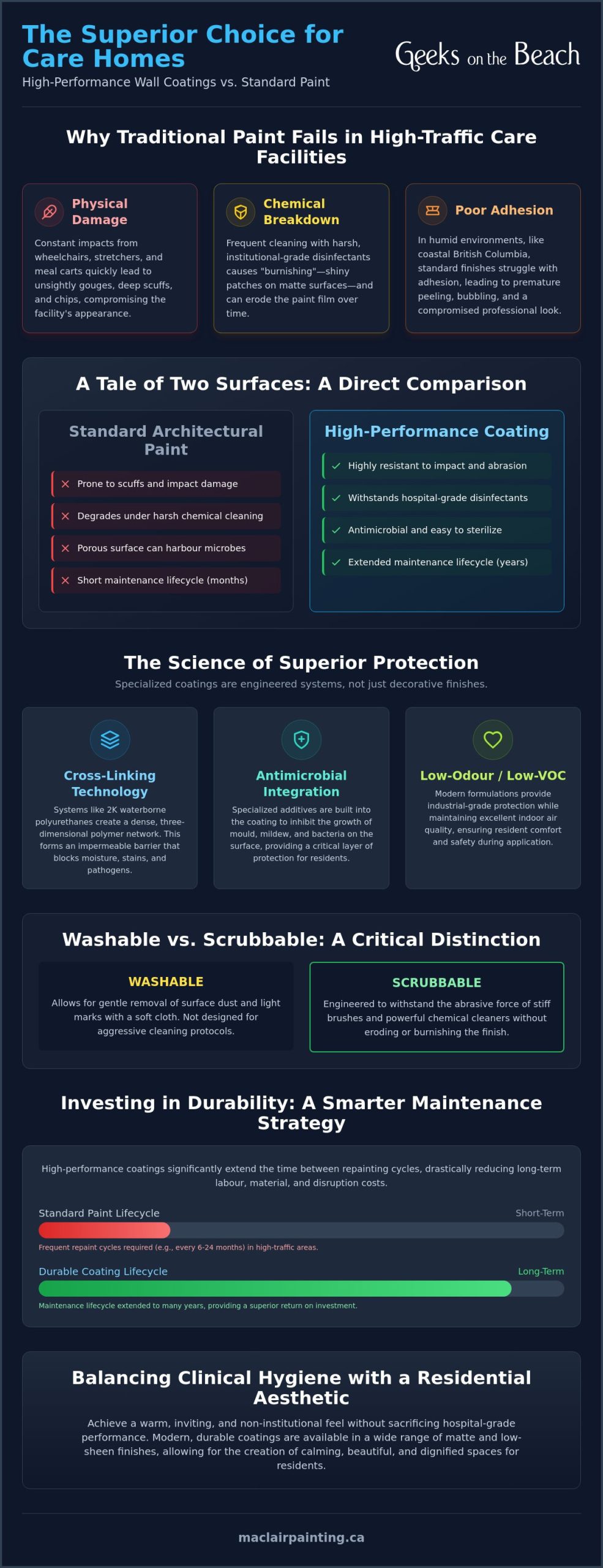
Standard architectural paint frequently fails in the demanding environment of a care home. High-traffic corridors are subject to constant physical impact from wheelchairs, meal carts, and stretchers, which quickly lead to unsightly gouges and deep scuffs. Beyond physical damage, frequent cleaning with institutional-grade detergents often causes “burnishing.” This effect occurs when the friction of scrubbing creates shiny, polished patches on a matte surface, making the walls look uneven and worn even when they are technically clean. In coastal British Columbia, moisture levels can also exacerbate these issues; standard finishes often struggle with adhesion in humid environments, leading to premature peeling and bubbling that compromises the facility’s professional appearance.
Why Healthcare Facilities Require Specialized Formulations
Modern healthcare environments demand advanced materials like 2K waterborne polyurethanes. These two-component systems create a cross-linked film that is significantly harder and more chemical-resistant than traditional one-part paints. This chemical density is essential for resisting the aggressive disinfection protocols required by Island Health. Furthermore, the integration of The Science of Antimicrobial Surfaces into coating technology helps inhibit the growth of mould and bacteria, providing a critical layer of protection for vulnerable residents.
When selecting durable wall coatings for care homes, it is vital to distinguish between “washability” and “scrubbability.” While a washable paint allows for the gentle removal of surface dust, a scrubbable coating can withstand the abrasive force of stiff brushes and quaternary ammonium compounds without eroding the finish. By choosing low-VOC formulations, facilities can achieve this industrial-grade protection while maintaining the indoor air quality essential for resident health and comfort.
The Science of Hospital Grade Wall Coatings: Protection and Hygiene
The efficacy of durable wall coatings for care homes lies in their molecular density. Unlike standard paints that rely on simple evaporation to dry, hospital-grade finishes often utilize cross-linking technology. This process creates a dense, three-dimensional network of polymers that forms an impermeable barrier. Pathogens, moisture, and stains cannot penetrate this molecular “net,” ensuring that the wall surface remains a sterile boundary rather than a porous reservoir for bacteria. By eliminating the microscopic seams and pores found in traditional finishes, these coatings provide a seamless surface that simplifies infection control protocols.
Hygiene is further enhanced through the integration of antimicrobial additives. These specialized components work at a cellular level to inhibit the growth of mould, mildew, and various bacteria. This proactive layer of defence aligns with the CDC Environmental Infection Control Guidelines, which emphasize the importance of maintaining easy-to-clean surfaces in healthcare settings. When these advanced materials are applied by a professional medical facility painting service, the result is a sophisticated environment that prioritizes resident safety without looking institutional.
Scuff and Impact Resistance: Protecting the Substrate
In a busy care facility, walls act as the primary buffer against physical movement. Standard drywall is relatively soft and easily damaged by the sharp corners of meal carts or the metal frames of stretchers. High-performance coatings often incorporate fibre-reinforcement or specialized resins that significantly increase the “Shore D” hardness of the surface. This measurement identifies the resistance of a material to indentation; a higher Shore D rating indicates a finish that can withstand significant impact without cracking or chipping. While corner guards provide localized protection, armouring the entire wall with a high-durability coating ensures the substrate remains intact even in high-traffic corridors.
Chemical Resistance Against Modern Disinfectants
Daily disinfection is a non-negotiable requirement for Island Health compliance, yet many common cleaners are surprisingly destructive. Quaternary ammonium compounds and bleach-based disinfectants can soften and eventually dissolve standard latex paint, leading to a sticky, compromised finish. Specialized 2K (two-component) systems are engineered to resist these aggressive chemicals. By mixing a resin with a hardener immediately before application, painters create a film that is chemically inert. This resilience prevents the “softening” effect often seen in older facilities, ensuring that the walls can be scrubbed repeatedly with institutional-grade fluids without losing their protective properties or their visual appeal.
Balancing Clinical Hygiene with a Residential Aesthetic
A care home is, first and foremost, a sanctuary for its residents. While the technical requirements for hygiene and infection control are absolute, a facility that resembles a sterile surgical suite can inadvertently diminish resident morale and dignity. Modern advancements in durable wall coatings for care homes have successfully solved this aesthetic dilemma. We don’t have to settle for the high-gloss, industrial finishes that reflect harsh overhead lighting and create a cold atmosphere. Instead, contemporary formulations allow for sophisticated matte and eggshell finishes that provide the same impermeable protection as their glossy predecessors. These low-sheen options are particularly effective at diffusing light and hiding the minor wall imperfections that inevitably occur in any active building.
The shift toward “biophilic” design is another critical element in modern facility care. By choosing finishes that evoke the natural world, administrators can create an environment that actively reduces resident anxiety. Texture and finish play a silent but vital role here. A high-performance coating with a refined, soft-touch finish feels intentional and curated rather than institutional. This thoughtful approach to the environment reinforces a sense of pride for staff and provides a comforting, beautiful space for residents and their families. For a real-world example of how these principles are applied in practice, our retirement community painting BC case study demonstrates the transformative impact of a specialized, low-disruption approach on both property value and resident well-being.
The Psychology of Colour in Senior Living
Choosing a palette is a strategic decision that directly impacts the daily well-being of residents. Soft, biophilic tones like warm neutrals and sage greens are proven to foster a calming, home-like atmosphere. However, colour also serves a vital safety function. For residents with visual impairments, high-contrast colours between walls and door frames are essential for safe navigation. Strategic use of accent walls also assists with wayfinding; a distinct colour in a common area or at the end of a corridor provides a visual landmark that helps residents orient themselves within the facility without feeling overwhelmed.
Achieving a High-End Finish Without Sacrificing Performance
A sophisticated interior should feel both premium and dependable. Specialized coatings can now mimic the depth and richness of high-end residential paints while maintaining a hospital-grade barrier. One critical factor we consider is the Light Reflectance Value (LRV). By selecting coatings with an appropriate LRV, we can brighten facility interiors without creating the glare that is often disorienting for aging eyes. This meticulous attention to detail ensures that the property remains functional, artistic, and welcoming. For those seeking inspiration on how to elevate their facility’s aesthetic, exploring MACLAIR’s interior painting services provides a glimpse into how technical expertise meets high-end design.
Strategic Implementation: ROI and Maintenance Planning
Investing in durable wall coatings for care homes is a strategic decision that looks far beyond the immediate aesthetics of a fresh coat of paint. For facility managers in Victoria, the true value of a hospital-grade finish is realized over a five-to-ten-year lifecycle. While the upfront cost of specialized materials and expert application is higher than standard architectural paint, the return on investment is found in the dramatic reduction of maintenance cycles. A corridor finished with conventional paint may require a full refresh every eighteen months due to scuffing and chemical erosion. In contrast, a high-performance system maintains its integrity and appearance for nearly a decade, effectively neutralizing the recurring expenses of labour and materials.
The financial benefits extend into operational efficiency. Every time a maintenance crew enters a wing, the facility incurs disruption costs that are difficult to quantify but easy to feel. By choosing a coating that lasts three to five times longer than standard products, you significantly reduce the frequency of these interruptions. This longevity ensures that your budget is spent on property enhancement rather than repetitive, reactive repairs. If you are ready to move away from constant touch-ups, consulting with a professional commercial painting consultant can help you design a sustainable maintenance schedule.
Calculating the Real Cost of Care Home Maintenance
Consider the logistical burden of repainting a 24/7 facility. Beyond the invoice from a contractor, administrators must account for the hidden costs of operational disruption. Moving residents, relocating sensitive medical equipment, and managing staff workflows around work zones creates significant stress and potential safety risks. When you compare the total expense of three standard paint jobs against a single application of a superior coating, the financial argument becomes clear. To evaluate your current facility, look for these key indicators of a failing system:
- Adhesion failure or peeling near baseboards and high-touch handrails.
- Persistent burnishing patches where cleaning has polished the matte finish.
- Substrate damage that penetrates through the paint layers to the drywall.
Professional Surface Preparation: The Foundation of Durability
A high-performance coating is only as reliable as the foundation beneath it. Because these advanced systems create such a dense, impermeable film, they require more rigorous preparation than traditional products. In the humid climate of coastal British Columbia, moisture testing is an essential step to prevent trapped vapour from causing future delamination. Meticulous substrate repair and the removal of old, failing layers ensure that the new system bonds permanently to the wall. For long-term asset protection, implementing a Commercial Painting Maintenance Plan Victoria BC provides a structured framework for preserving your facility’s value and ensuring Island Health compliance remains effortless.
Partnering with Specialized Painters in Victoria, BC
The final and perhaps most critical component of a successful facility upgrade is the human element. Applying durable wall coatings for care homes isn’t a standard painting task; it’s a technical procedure that requires a deep understanding of healthcare logistics and specialized material science. Working in an occupied environment necessitates a master craftsman’s touch. Our teams prioritize quiet, methodical work habits and the use of low-odour, low-VOC materials to ensure that resident comfort remains undisturbed. We recognize that we aren’t just performing a maintenance task; we’re guests in someone’s home, and our presence must be as unobtrusive as possible.
Vancouver Island’s unique environmental conditions, particularly the high humidity and salt air found in Victoria, require specific local knowledge. A coating system that performs well in the interior of the province might fail prematurely here if the contractor doesn’t account for substrate moisture levels and coastal atmospheric pressure. By choosing a locally owned and operated partner, you ensure that your investment is protected by professionals who understand the local climate and the long-term preservation of property value. This commitment to craftsmanship ensures that the technical benefits of the coating are fully realized through impeccable execution.
Navigating Local Healthcare Standards and Regulations
Compliance with Island Health standards is a foundational requirement for any medical facility project in British Columbia. We manage project timelines with meticulous precision, often phasing work to minimize disruption to daily care routines and meal services. Our familiarity with regional safety protocols means that every stage of the application process, from containment to final curing, meets or exceeds the rigorous expectations of health authorities. This local expertise allows for a seamless transition from planning to completion, ensuring that your facility remains both compliant and beautiful without the stress of regulatory oversight.
The MACLAIR Process for Healthcare Facilities
Our approach begins with a comprehensive technical evaluation rather than a simple estimate. We analyze the specific needs of each corridor and resident room, identifying the optimal balance of durability and aesthetic warmth. Following the rigorous surface preparation phase discussed earlier, the application of high-performance finishes is executed with the quiet confidence that defines our reputation in the Victoria community. The process concludes with a thorough quality assurance walkthrough, ensuring every detail aligns with our standards of excellence. If you’re preparing for a facility refresh, we invite you to plan your medical office project with our team of local experts to ensure a transformative and lasting result.
Elevating Your Facility Care Standards
Securing the longevity and beauty of your senior living community requires a strategic shift toward specialized materials. By selecting high-performance, durable wall coatings for care homes, you bridge the gap between clinical-grade protection and the warm, inviting atmosphere that residents deserve. These advanced finishes don’t just resist the daily wear of medical equipment; they safeguard your property value and ensure compliance with provincial health standards for years to come. It’s a choice that balances technical necessity with the quiet comfort of a residential sanctuary.
As specialists in Victoria retirement community and medical facility painting, we bring a master-class approach to every project. Our expert application of high-durability epoxy and polyurethane coatings ensures a result that stands up to the most rigorous disinfection protocols while maintaining a sophisticated aesthetic. This level of craftsmanship ensures your investment pays dividends through significantly reduced maintenance cycles and a pristine environment for staff and residents alike.
Ready to enhance your environment with precision and care? Request a Specialized Coating Consultation for Your Care Home today. We look forward to helping you create a space that is as resilient as it is beautiful.
Frequently Asked Questions
What makes a wall coating “hospital grade” compared to regular paint?
Hospital-grade coatings are distinguished by their high-density, cross-linking molecular structure, which creates a non-porous and impermeable barrier. While standard architectural paint remains porous and susceptible to moisture absorption, these specialized systems resist deep penetration from bacteria and pathogens. This industrial-grade resilience ensures the surface can withstand aggressive chemical disinfection without eroding the finish or compromising the substrate’s integrity.
How long do durable wall coatings for care homes typically last before needing a refresh?
High-performance durable wall coatings for care homes typically provide a service life of five to ten years depending on the traffic levels in specific corridors. This longevity far exceeds the eighteen-month cycle common with standard paints in institutional settings. By investing in these resilient systems, facility managers significantly reduce the frequency of maintenance disruptions and the total cost of ownership over the building’s lifecycle.
Are these specialized healthcare coatings safe for residents with respiratory sensitivities?
Yes, modern healthcare coatings are engineered with low-VOC (Volatile Organic Compound) formulations to prioritize the health and safety of residents and staff. These waterborne systems emit minimal odours during application and curing, ensuring that indoor air quality remains high. This is particularly critical in long-term care environments where residents may have heightened respiratory sensitivities or pre-existing health conditions.
Can high-performance coatings be applied over existing paint in my facility?
Specialized coatings can often be applied over existing finishes, provided the original substrate is stable and properly prepared. Our team conducts thorough adhesion testing to ensure the new system will bond effectively to the previous layers. If the underlying paint is peeling or compromised, it must be meticulously removed or repaired to create a sound foundation for the high-performance finish.
How do durable wall coatings help with infection control in senior living?
These coatings support infection control by providing a seamless, non-porous surface that eliminates microscopic hiding places for pathogens. Many formulations also incorporate antimicrobial additives that actively inhibit the growth of mould, mildew, and bacteria on the wall surface. When combined with regular cleaning protocols, these systems create a proactive layer of defence that aligns with Island Health hygiene standards.
Why is professional surface preparation so critical for these specialized coatings?
Rigorous surface preparation is the foundation of a coating’s durability because high-performance films require a pristine surface for optimal mechanical bonding. Without meticulous cleaning, sanding, and moisture testing, even the most advanced materials may fail prematurely. Professional preparation ensures that the investment in high-end materials is protected by a permanent, reliable bond to the substrate.
Do durable wall coatings come in different colours and finishes?
Modern durable wall coatings for care homes are available in a vast array of colours and sophisticated finishes, including matte and eggshell. This variety allows administrators to move away from cold, institutional looks toward warm, biophilic palettes that foster a calming environment. You can achieve a high-end residential aesthetic without sacrificing the clinical-grade performance required for daily facility operations.
What is the best way to clean and maintain hospital grade wall coatings?
Maintaining these finishes is straightforward; they are designed to be scrubbed with standard institutional disinfectants and quaternary ammonium compounds. Unlike regular paint, these surfaces won’t burnish or develop shiny patches when cleaned frequently. We recommend using soft cloths or sponges rather than abrasive pads to preserve the integrity of the finish and ensure the aesthetic remains pristine over its entire service life.