

In a clinical environment, the floor is far more than a simple surface; it’s a vital medical instrument that must withstand rigorous sanitization and constant foot traffic. You likely realize that traditional tile and grout systems often fail to meet the modern demands of infection control, creating porous traps for pathogens that are notoriously difficult to clean. Choosing the right epoxy flooring for medical facilities Victoria is about more than aesthetics; it’s a commitment to patient safety and operational excellence. We understand that the pressure to maintain a sterile, slip-resistant environment while managing rising maintenance costs can be a significant burden for healthcare providers.
This definitive reference explores how high-performance epoxy coatings provide a seamless, antimicrobial solution that aligns with the updated AS 2982:2026 standards for laboratory and clinical spaces. We will examine the technical precision required for a successful installation, from achieving the mandatory P3 or P4 slip resistance ratings under AS 4586:2013 to selecting low-VOC resins that protect indoor air quality. You’ll discover how a methodical approach to flooring can transform your facility into a calm, professional space that prioritizes both longevity and the well-being of every patient who walks through your doors.
Key Takeaways
- Learn why monolithic resinous systems are essential for meeting the rigorous infection control standards of modern healthcare facilities.
- Understand how to balance high slip resistance with sanitization requirements to protect both patients and staff in high-traffic clinics.
- Discover the long-term financial benefits of choosing epoxy flooring for medical facilities Victoria over traditional materials that require frequent stripping and waxing.
- Identify the specific resinous solutions best suited for various facility zones, including welcoming reception areas and sterile surgical suites.
- Explore the specialized preparation techniques that ensure a durable, professional finish while carefully managing dust and odours in active medical environments.
Elevating Healthcare Standards with Medical-Grade Epoxy Flooring
The healthcare landscape in British Columbia is undergoing a quiet but significant evolution. Facility managers are increasingly recognizing that the standard finishes of the past, like Vinyl Composition Tile (VCT) or linoleum, simply cannot keep pace with modern hygiene protocols. This shift toward high-performance resinous systems represents a fundamental change in how we view clinical infrastructure. In Victoria’s private clinics, flooring is no longer treated as a background finish; it’s considered a primary tool for infection control.
Defining “medical-grade” requires looking beyond the surface. It isn’t merely a decorative layer. Instead, it’s a meticulously engineered system of epoxy resins designed for extreme adhesion and chemical resistance. For many specialized environments in the Capital Regional District, this transition is driven by a need to eliminate the airborne particulate contamination often associated with aging, cracked tiles or peeling adhesive. When traditional flooring begins to fail, it releases microscopic debris into the air, which can compromise sterile environments and sensitive diagnostic equipment.
The Monolithic Advantage: Hygiene Without Seams
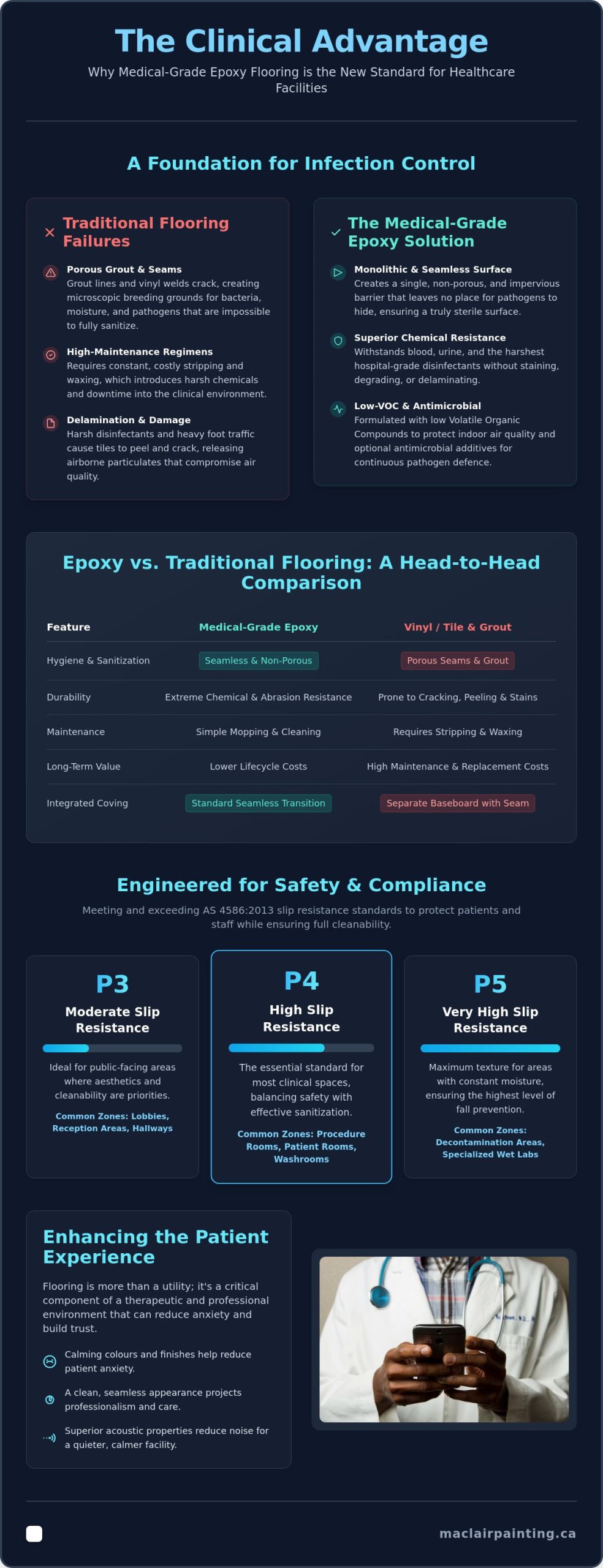
Traditional flooring relies on welds or grout lines that eventually fail under the pressure of industrial-strength cleaners. These seams become microscopic breeding grounds for bacteria and moisture. Monolithic flooring is a seamless, non-porous surface applied in liquid form. By creating an impervious barrier, these systems resist penetration from blood, urine, and harsh disinfectants that would typically delaminate standard vinyl. We often recommend integrated coved flooring transitions, which extend the epoxy up the wall base. This eliminates the 90-degree corners where dust and pathogens typically hide, allowing for a truly deep clean that reaches every centimetre of the room.
Meeting Victoria’s Healthcare Facility Requirements
Local health authorities maintain strict expectations for sanitization and patient safety. Choosing epoxy flooring for medical facilities Victoria ensures compliance while prioritizing the long-term health of the building. We place a high premium on using low-VOC (Volatile Organic Compounds) materials during the application process. This is vital for maintaining indoor air quality in sensitive environments like oncology wards or retirement communities, where patients may have compromised respiratory systems. A professional installation ensures that the facility remains safe for occupancy without the lingering chemical odours associated with lower-quality industrial coatings. By investing in these advanced surfaces, Victoria clinics gain a durable foundation that supports both clinical excellence and patient peace of mind.
Safety, Hygiene, and the Patient Experience
Patient care begins the moment an individual enters your clinic. While we previously discussed the structural benefits of seamless surfaces, the human experience depends on the tactile and visual qualities of the environment. High-performance epoxy flooring for medical facilities Victoria offers an opportunity to integrate antimicrobial additives directly into the resin. This provides a continuous defence against pathogens that works alongside your daily sanitization routines. Beyond hygiene, the visual impact of your flooring plays a quiet role in patient psychology. By moving away from sterile, harsh whites and adopting calming neutrals or soft blues, you can significantly reduce the anxiety often felt in clinical settings.
Non-Slip Textures and Liability Reduction
Safety is paramount, particularly in areas prone to moisture. We customize the coefficient of friction based on the specific zone of your facility. For example, a lobby might require a P3 slip resistance rating under AS 4586:2013 to maintain a sleek look, whereas a washroom or procedure room necessitates a P4 or P5 rating for maximum safety. Understanding the full science behind achieving these ratings without sacrificing cleanability is essential; our detailed guide on non-slip epoxy floor coatings explains how precision-engineered additives meet rigorous traction standards while preserving aesthetic grace. This tailored approach effectively reduces workplace injury claims and slip-and-fall liability for Victoria medical providers. It’s possible to achieve these safety standards without creating a surface that’s too abrasive to mop effectively. Balancing texture with cleanability is where true craftsmanship meets clinical necessity.
Acoustics and Ergonomics in Clinical Settings
The physical toll on healthcare professionals is often overlooked during facility design. Nurses and doctors spend hours on their feet, often walking several kilometres during a single shift. Thick-build epoxy systems provide a degree of ergonomic cushioning that reduces joint fatigue compared to hard concrete or thin VCT. Additionally, these systems excel at sound dampening. In high-ceiling medical lobbies, the echo of footsteps and equipment can create a chaotic atmosphere. A well-installed resinous floor absorbs these sounds, fostering a quieter, more tranquil environment for recovery. If you’re looking to enhance both staff comfort and patient peace, exploring specialized medical coatings is a wise investment in your facility’s human capital.
Comparing Epoxy Flooring to Traditional Medical Surfaces
Selecting the right surface involves weighing initial capital expenditure against decades of operational costs. While Vinyl Composition Tile (VCT) or medical-grade linoleum might appear cost-effective during the construction phase, many Victoria property managers eventually realize that the “hidden” costs of these materials are substantial. Traditional tile systems rely on seams and adhesives that are vulnerable to the high-pressure environment of a modern clinic. In contrast, epoxy flooring for medical facilities Victoria provides a monolithic barrier that eliminates the need for the aggressive maintenance cycles required by porous alternatives.
The primary drawback of VCT is its reliance on sacrificial wax coatings. These layers must be frequently stripped and reapplied to maintain hygiene and shine, a process that is both labour-intensive and disruptive to patient care. In a 24-hour medical environment, closing a wing for floor maintenance is often impossible. Resinous systems remove this burden entirely. They offer a permanent, high-gloss finish that remains impervious to fluids without the need for constant chemical intervention. This shift in maintenance philosophy represents a significant long-term saving for healthcare providers who prioritize asset preservation.
Maintenance and Longevity Comparison
Daily cleaning protocols for resinous floors are remarkably straightforward. Because the surface is non-porous, pathogens and contaminants remain on the surface where they can be easily neutralized by hospital-grade disinfectants. Unlike linoleum, which can become brittle or stained when exposed to harsh sterilization agents, epoxy maintains its structural integrity and colour. Integrating these surfaces into a broader Commercial painting maintenance plan Victoria BC ensures that every square metre of your facility remains in peak condition, protecting your investment from the ground up.
Durability Under Medical Stressors
Clinical environments subject floors to unique physical demands that standard commercial materials cannot withstand. High-build epoxy systems are engineered for exceptional point-load capacity, which is essential for supporting heavy diagnostic imaging machinery or specialized surgical tables. The impact resistance of these coatings also protects the substrate from damage caused by dropped medical instruments or heavy equipment carts. Additionally, in sterilization rooms or laundry areas, thermal shock resistance is a critical factor. Epoxy flooring for medical facilities Victoria is designed to handle rapid temperature fluctuations and constant moisture without delaminating or cracking, ensuring a reliable surface in the facility’s most demanding zones.
Strategic Selection: Mapping Epoxy Solutions to Victoria Facility Zones
Successful healthcare facility management requires a nuanced understanding of how different spaces function under daily pressure. A private clinic in Saanich has vastly different requirements than a high-volume diagnostic laboratory in the city centre. When selecting epoxy flooring for medical facilities Victoria, we categorize zones based on their primary stressors. This strategic mapping ensures that your investment is allocated where it matters most, whether that is aesthetic appeal in a waiting room or extreme chemical resistance in a lab. Selecting the appropriate epoxy flooring for medical facilities Victoria involves more than just picking a colour; it requires a technical understanding of each room’s function.
Victoria’s expanding sector of retirement communities and senior living facilities, especially in communities like Oak Bay, presents a unique challenge. These environments must feel like home while functioning with the efficiency of a clinical space. We prioritize flooring that offers high slip resistance for residents using mobility aids, yet remains easy for staff to sanitize. The goal is to create a safe, durable surface that doesn’t feel overly institutional, preserving the dignity and comfort of the residents while ensuring the building remains easy to maintain.
Patient-Facing Areas: Aesthetics and First Impressions
In the professional medical offices of Saanich, the reception area serves as the first point of contact for patients. A decorative flake or metallic finish provides an inviting, sophisticated atmosphere that aligns with modern healthcare branding. This choice isn’t just about visual appeal; it’s about establishing an immediate sense of calm and professionalism. Our Epoxy floor coating Victoria BC guide explains how these decorative systems maintain the same rigorous durability as industrial coatings while offering a more refined, aspirational look that puts patients at ease.
Clinical and Sterile Zones: Maximum Protection
Surgical suites and procedure rooms demand the highest level of technical performance. In these sterile environments, we prioritize extreme chemical resistance and antimicrobial properties to withstand aggressive sterilization cycles. For rooms housing sensitive diagnostic electronics, Electrostatic Dissipative (ESD) flooring is a critical requirement. Advanced systems from specialists like Epoxy Solutions™ prevent static discharge that could compromise delicate equipment or interfere with patient data readings. We ensure that transitions between these sterile zones and general hallways are perfectly seamless, eliminating the thresholds where contaminants often collect.
Back-of-house areas like laboratories, storage rooms, and staff break areas require high-build coatings capable of handling heavy point-loads from diagnostic machinery or industrial shelving. These zones often face the most significant physical abuse, yet they are the backbone of facility operations. By selecting a high-performance resinous system for these areas, you ensure that your building’s infrastructure remains protected against spills, impacts, and constant traffic. If you are looking to enhance the safety and longevity of your clinical space, contact our team for a professional assessment of your facility’s specific zone requirements.
The MACLAIR Process: Precision Installation for Victoria Healthcare
The enduring performance of epoxy flooring for medical facilities Victoria isn’t determined by the final coat of resin, but by the technical rigour applied before the first drop is poured. We approach every clinical project with the mindset of a master craftsman, recognizing that a medical environment demands a level of precision far beyond standard commercial work. In Victoria’s unique coastal climate, where humidity and sub-floor moisture can fluctuate, our methodical approach to surface preparation serves as an essential investment in your property’s longevity. We don’t just apply a coating; we engineer a bond designed to withstand the relentless pace of modern healthcare.
Meticulous Preparation and Moisture Mitigation
Our process begins with heavy-duty diamond grinding to mechanically profile the concrete, ensuring the substrate is porous enough to accept the resinous system. This step is vital for creating a permanent mechanical bond that won’t peel under the weight of heavy diagnostic equipment or constant foot traffic. We pay special attention to the specific challenges of Vancouver Island’s geography, particularly the moisture levels inherent in our coastal environment. Conducting rigorous concrete moisture testing is mandatory for medical epoxy longevity as it identifies hidden vapour emissions that could otherwise cause delamination or unsightly blistering in the finished surface. Property owners dealing with similar moisture challenges in other settings can find valuable context in our guide to concrete floor epoxy Victoria, which covers how coastal conditions affect substrate preparation and long-term coating performance. By addressing these technical variables early, we provide a foundation that remains stable and impervious for years to come.
Professional Project Management and Reassurance
We understand that a medical facility is a living, breathing environment where patient care cannot be compromised. Our project management team coordinates closely with your facility’s schedule to minimize disruption, often working in phases to keep critical zones operational. During installation, we utilize HEPA-filtered dust extraction and low-VOC materials to maintain air quality, ensuring that neighbouring clinics or wards remain unaffected by our presence. This commitment to quiet professionalism and transparency allows healthcare administrators to feel supported and informed throughout the transformation.
Choosing the right partner for such a specialized task requires careful due diligence. We recommend reviewing the ultimate checklist for hiring professional painters in Victoria, BC to ensure your chosen contractor possesses the technical expertise required for clinical settings. Upon completion, we conduct a comprehensive walkthrough and provide maintenance education for your environmental services staff. This final step ensures your team is equipped to preserve the aesthetic and functional excellence of your new epoxy flooring for medical facilities Victoria. Our goal is to serve as a trusted consultant, delivering a result that reflects the high standards of care you provide to your patients every day.
Investing in the Future of Your Clinical Environment
Transitioning to a monolithic resinous system is more than a facility upgrade; it’s a commitment to a higher standard of patient care. By eliminating the porous seams of traditional flooring and prioritizing ergonomic comfort, you create an environment that supports both staff well-being and clinical sterility. We’ve explored how technical precision in surface preparation and zone-specific material selection are the pillars of a successful installation. Choosing high-performance epoxy flooring for medical facilities Victoria ensures that your infrastructure remains a durable, hygienic asset for decades to come.
As Victoria’s trusted master craftsmen, we bring quiet confidence and a sophisticated approach to every project. Our deep expertise in medical facility and retirement community painting allows us to deliver low-odor, high-performance coating solutions that respect the sensitivity of your active clinical space. We invite you to Request a Professional Consultation for Your Victoria Medical Facility to begin the process of preserving and enhancing your property. Let’s work together to create a transformative environment that reflects the excellence of the care you provide every day.
Frequently Asked Questions
Is epoxy flooring safe for hospitals and medical clinics?
Yes, epoxy is one of the safest and most hygienic flooring options available for clinical environments. Its seamless, non-porous nature prevents the growth of bacteria and pathogens that often thrive in the grout lines of traditional tile. When professionally installed, it meets or exceeds the rigorous health and safety standards required for modern medical infrastructure.
How long does it take to install epoxy flooring in a medical facility?
A professional installation typically requires three to five days to complete, depending on the square footage and the complexity of the preparation. This timeframe includes meticulous diamond grinding, the application of multiple resin layers, and the necessary curing period. We carefully coordinate these phases to minimize disruption to your facility’s operational schedule.
Can epoxy flooring be customized to be non-slip?
Absolutely, the surface texture is fully customizable to achieve specific slip-resistance ratings tailored to different facility zones. By integrating specialized aggregates like fine quartz, we can provide a finish that ensures safety in wet areas while remaining smooth enough for effective sanitization. This balance is vital for protecting both patients and staff from slip-and-fall accidents. For a deeper understanding of how these traction solutions are engineered, our guide on non-slip epoxy floor coatings covers the full science behind achieving high-performance safety ratings.
How do you clean and maintain medical-grade epoxy floors?
Maintenance is exceptionally straightforward, requiring only regular mopping with standard hospital-grade disinfectants and warm water. Because the surface is monolithic, there’s no need for the labour-intensive stripping and waxing associated with traditional vinyl floors. This ease of care ensures a sterile environment while significantly reducing your long-term facility maintenance costs.
To ensure your facility meets the most current standards for hygiene, Advance Cleaning Services Inc. offers specialized medical cleaning solutions that complement these advanced flooring systems.
Is epoxy flooring better than vinyl (VCT) for healthcare settings?
Yes, epoxy flooring for medical facilities Victoria offers superior longevity and hygiene when compared to Vinyl Composition Tile. VCT relies on adhesives and seams that can trap moisture and pathogens, eventually leading to delamination under heavy traffic. Epoxy creates a permanent, impervious bond with the substrate that withstands the weight of heavy medical equipment without cracking.
Does medical epoxy flooring have a strong odour during installation?
We prioritize the use of low-VOC and high-solids resins that produce minimal odour during the application and curing process. This is a critical consideration for active clinics and retirement communities where maintaining indoor air quality is paramount. Any faint scent that does occur dissipates rapidly, allowing for a safe and comfortable return to normal operations.
What are antimicrobial additives in epoxy flooring?
Antimicrobial additives are specialized agents integrated directly into the resin to inhibit the growth of bacteria, fungi, and mould on the floor’s surface. This provides a continuous, 24/7 layer of protection that supplements your daily cleaning protocols. It’s an essential feature for high-risk areas like surgical suites and laboratories where infection control is the highest priority.
Can epoxy flooring help with noise reduction in a busy clinic?
High-build epoxy flooring for medical facilities Victoria provides significant sound-dampening benefits that help create a more tranquil environment. The thickness of the resinous system absorbs the impact of footsteps and the rolling of equipment carts, reducing the echo often found in clinical hallways. This acoustic improvement contributes to a calmer atmosphere for patient recovery and a better workspace for staff.